We live in a pretty progressive world. People are able to be open about who they are, and know that someone, somewhere is going to accept them. Sexuality, in particular, is an issue that we’re becoming more and more comfortable talking about.

Social openness towards LGBTQ+ issues can be tracked through the history of the acronym itself; from the coining of the word ‘gay’ in the 1940s and ‘lesbian’ in the 60s, the addition of ‘bisexual’ and ‘transgender’ in the 90s, and the use of terms like queer, intersex and asexual in longer versions today. We’re constantly altering our understanding of just how complex sexual identity can be. And as hard as some might try to fight it, that kind of knowledge inevitably results in a shift of social attitudes.

Humanity has come a long way when it comes to how we treat each other. But it’s not perfect, and it’s not global.
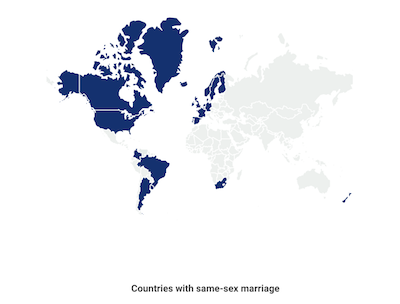
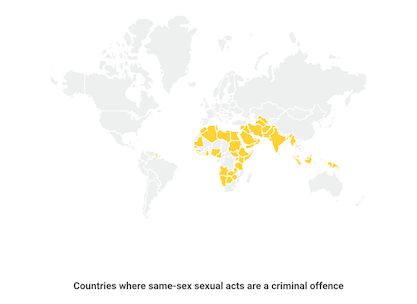
In 76 countries around the world, being gay is still illegal. Sometimes, this is because of religion, others it’s particular political views. Consensual, adult acts of homosexuality are criminalised under sodomy laws, and people spending their entire lives closeted and afraid. In 11 of those countries, the price of being yourself can be death. 40 countries, including Australia, still have a legal ‘gay panic’ clause, which enables people who have committed assault or murder to justify their actions by saying they were provoked by their victim’s sexuality.

76 isn’t everybody. But compared to the 24 countries that allow same sex marriage, the 26 that allow same sex adoption, or even the 49 that allow openly gay people to serve in the military, 76 countries seem like a lot.

Because it’s so dangerous to be gay, bi or trans in large chunks of the world, for many people the choice is between hiding or leaving. Sometimes, migration is the only option.
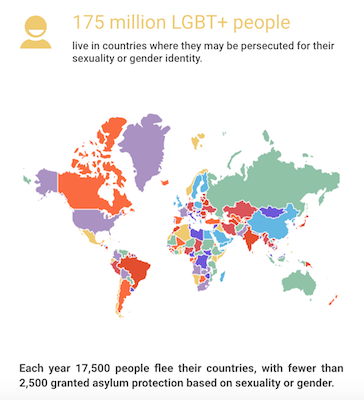
In Australia, immigration policy says that refugees and asylum seekers can be granted protection if they fear persecution for being part of certain ‘social groups’. As of the 1990s, that includes sexual preference. In 2003, it was ruled that nobody could be denied protection in Australia on the basis that they could have just hidden their sexuality back home.

The decision making process for granting asylum is inconsistent, however, and often relies on stereotypes and generalisations to assess candidates. Questions asked include whether an individual joined any LGBTQ+ support groups or partied at gay clubs.

But, in 2013, a new policy was passed that meant all refugees and asylum seekers arriving to Australia by boat were to be sent to Manus Island in Papua New Guinea for processing. Papua New Guinea is one of the 76 countries that criminalises homosexuality, with a potential penalty of 14 years in prison. Any LGBTQ+ refugees trying to gain access to Australia are required to openly declare their sexuality in order to qualify for asylum, but this means putting themselves at risk of legal and social persecution while on Manus Island.

Of course, not everybody leaving their country is a refugee, and Australia is diverse in both its migrant population and its LGBTQ+ community.

One migrant who has made Australia his home is Noah Dau, who lives in Melbourne with his fiancé Nathaniel.

Homosexuality has never been criminalised in Vietnam, but there is no same-sex marriage or legal recognition of same-sex couples at all. On a cultural level, LGBTQ+ relationships are traditionally taboo, but attitudes have progressively become more supportive and accepting.

It’s not only culture that Noah has found vastly different in Australia and Vietnam, but their LGBTQ+ communities as well.

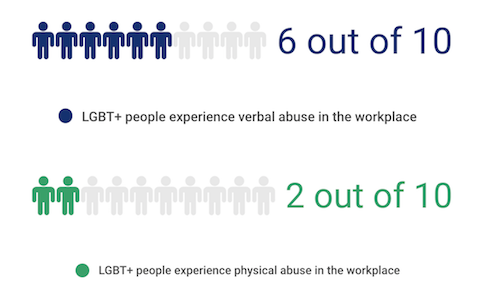
Although Noah is living a happy life in Melbourne, attitudes towards LGBTQ+ individuals in Australia are far from perfect. Gay, bisexual, trans and gender diverse Australians are often subject to discrimination and mistreatment in their everyday lives.


The question of equal rights and the treatment of the LGBTQ+ community is in debate in Australia now more than ever, as campaigners gear up for the same-sex marriage postal vote, which comes to a close on November 7. On both sides of the debate, yes and no, people are jumping at the chance to have their say.

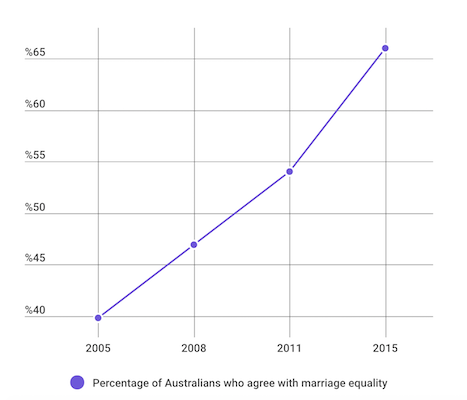
Support for marriage equality has been on the rise in Australia, rising from 40% to 66% from 2005-2015.


With rallies in every major city, and posters and murals springing up daily, it seems nobody is scared to speak their mind. But Noah and Nathaniel worry that that’s exactly what might happen in the wake of this debate. With relaxed regulation on what can and can’t be said and a sense of public urgency with the approaching deadline, there’s a concern that LGBTQ+ Australians (and young or questioning people in particular) might be impacted by the tense atmosphere created.

Frankie made a video

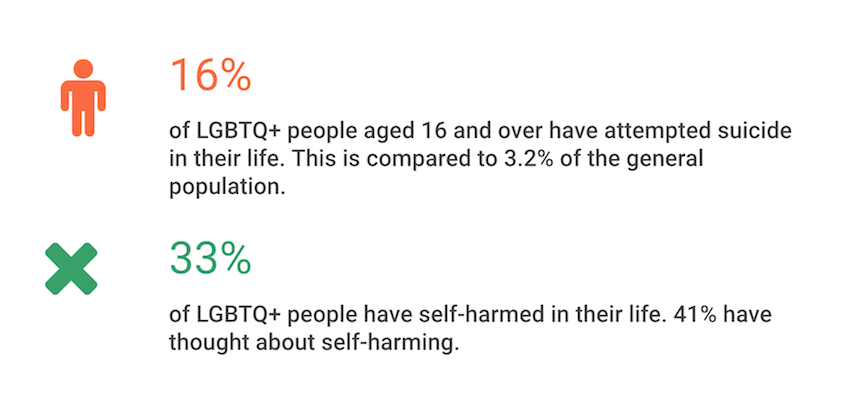
Mental health is a serious issue in the LGBTQ+ community, with higher levels of depression, anxiety and suicide than the general population.


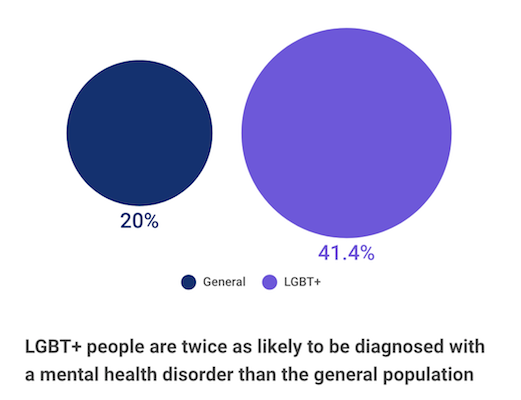
LGBTQ+ individuals are twice as likely to be diagnosed with a mental health disorder than the general population; and three and three and a half times more likely to be diagnosed with depression and anxiety respectively. They’re also more likely to have self-harmed or attempted suicide, or to have thought about doing either. Younger LGBTQ+ people are more likely to have negative mental health than their older counterparts, with 47.7% of younger and 32.5% of older people being diagnosed with mental health disorders. These figures are even higher for trans and gender diverse people, who are two times more likely to be diagnosed with a mental health disorder than other LGB people, and three times more likely to contemplate suicide.


If you are feeling affected by any of the topics discussed or statistics shown, please do not hesitate to reach out to these services for help:
Q Life, Australia’s first nation-wide LGBTQ+ helpline on 1800 184 527 (or via online chat)
Lifeline on 13 11 14
Beyond Blue 1300 22 4636 (or via online chat)
Kids Helpline on 1800 55 1800

Frankie made a video


Noah is very happy with his life in Australia, his loving fiancé and their matching Apple Watches, but like most LGBTQ+ people in today’s world, there’s still obstacles in his path.

Frankie made a video